Start & transition
Understand the category, fit the first pair and change exposure deliberately.
01 THE INDEPENDENT NATURAL-FOOTWEAR FIELD GUIDE
Tell the Fit Lab how you move, what your feet need and how much ground you want to feel. Leave with three useful Amazon starting pointsânot a wall of random shoes.
Five quick signals create a smarter starting board. Results open current Amazon searches with our affiliate attribution; availability and fit still need to be verified on the live listing.
02 SHOP BY THE JOB
Every collection starts with a foot, surface or use signal. Each one opens three Amazon search lanes and links into the articles that answer the next question.
Beginner-friendly barefoot and transitional shoes with enough protection to make the change deliberate rather than abrupt.
Moderate ground feelâ02 / ActivityWalking-focused barefoot shoes for errands, travel, fitness walking and long days, with fit prioritized before minimalism.
Stable heel fitâ03 / ActivityMinimalist running options organized by experience, surface, foot shape and preferred ground feel.
Commercial laneâ04 / ActivityTrail-capable barefoot hiking shoes with traction, rock protection and fit matched to the route rather than a generic outdoor badge.
Lug patternâ05 / Foot shapeBarefoot shoes separated by actual internal width, toe shape and volumeânot just a generic wide label.
Matched toe silhouetteâ06 / ActivityQuick-draining, flexible water shoes for rocky shores, paddling and wet transitions.
Drainageâ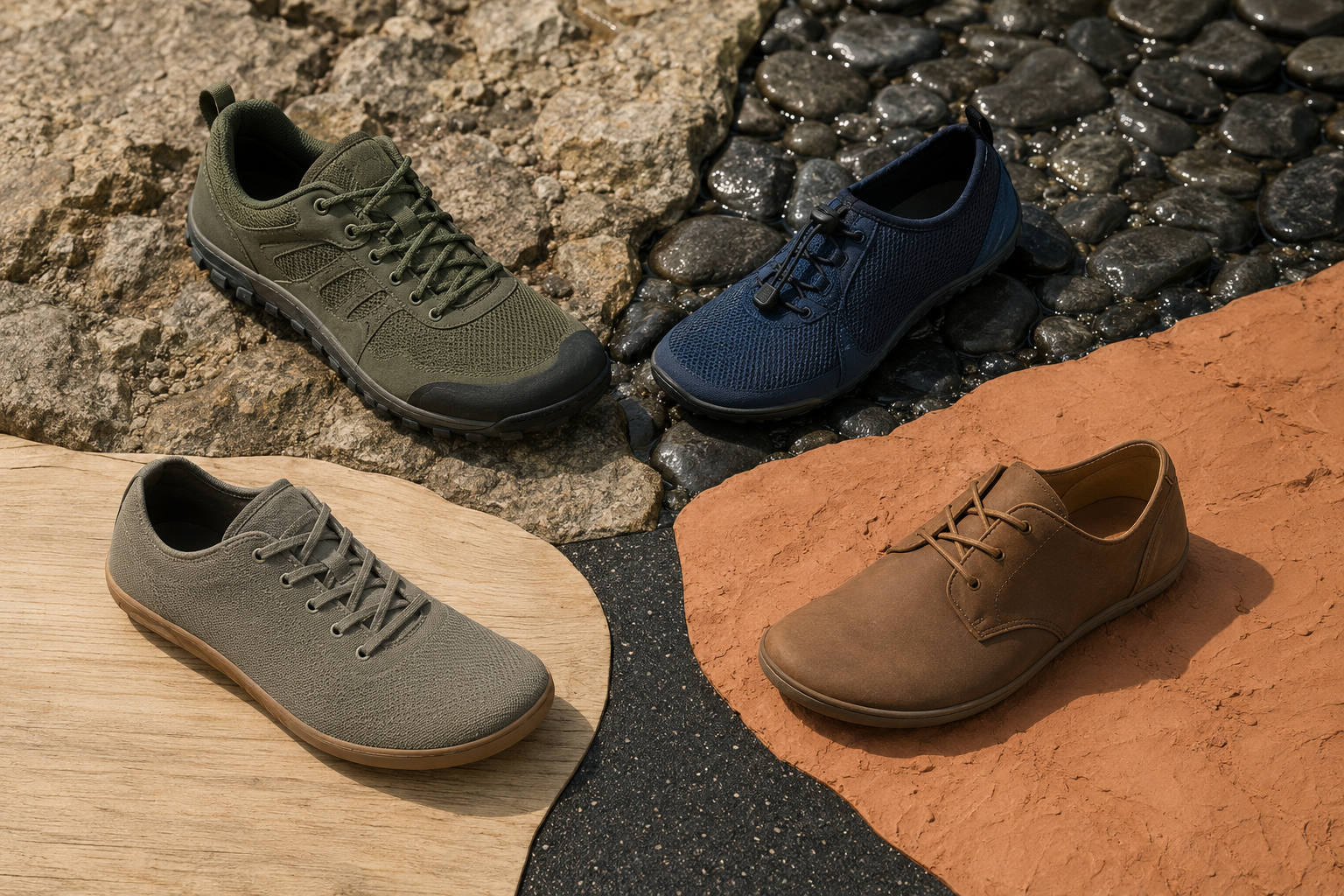
03 THE GROUND-FEEL SPECTRUM
A natural toe shape can live above a paper-thin outsole or a protective cushion. We separate four decisions that shopping pages often blur together.
04 TOPICAL MAP
Understand the category, fit the first pair and change exposure deliberately.
Walking, running, hiking and training paths matched to the surface and workload.
Width, toe silhouette, volume, arch preference and gentler transition lanes.
Work, water, dress, family and material choices without losing the fit logic.
05 BRAND FIELD GUIDE
Brands change lasts, outsole thickness and fit across product lines. Each hub maps the name back to the job, foot shape and current Amazon search.
Open all brand maps â06 FIT-FIRST FIELD NOTES
Each guide gives a direct answer, a model or category-specific test, current shopping lanes and links to the collection, brand and neighboring decisions.
Barefoot shoes usually combine a foot-shaped toe box, low or zero heel-to-toe drop, high flexibility and less underfoot structure than conventional footwear. The category is a spectrum, not one fixed construction.
Read field note âFoundations / 02People choose barefoot shoes primarily for toe room, flatter geometry, flexibility and greater ground feedback. Those traits can feel freeing, but they also require a fit and transition that suit the wearer.
Read field note âFoundations / 03The clearest design benefits are anatomical toe room, reduced heel elevation and flexibility. Broader health outcomes vary by person and should not be presented as guaranteed treatment effects.
Read field note âBuying / 04Barefoot shoe prices vary with the brand, materials, construction, distribution and available alternatives. A higher price does not guarantee better fit, durability or health benefits.
Read field note âTransition / 05A beginner usually does best with a foot-shaped shoe and a manageable change in drop, flexibility and cushioningânot necessarily the thinnest option available.
Read field note âFoundations / 06Barefoot and minimalist are overlapping marketing terms for footwear with reduced structure. Compare the actual toe shape, heel-to-toe drop, sole thickness and flexibility rather than assuming one label defines a stricter standard.
Read field note âFoundations / 07Zero drop only means the heel and forefoot sit at the same stated height. A zero-drop shoe can still be highly cushioned, stiff and structured.
Read field note âTransition / 08Transition by adding short, easy periods in the new footwear while keeping total activity stable. Increase only when the current exposure feels ordinary during and after use.
Read field note â07 START WITH THE SHAPE